
AP Comp Sci A Unit 1 is a foundational course that lays the groundwork for the rest of the AP Computer Science A curriculum. The unit focuses on the basics of programming, including syntax, semantics, and data types.
You'll learn about variables, which are used to store and manipulate data in a program. Variables can be declared with specific data types, such as integers or strings.
Understanding the concept of variables is crucial in programming, as it allows you to write efficient and effective code. In programming, variables are used to store and manipulate data, and are a fundamental building block of any program.
The unit also covers control structures, which are used to control the flow of a program. Control structures include if-else statements, for loops, and while loops.
Worth a look: École Des Technologies Numériques Avancées
Case Studies & Labs
Case studies were a key part of the AP exam until 2014-15, when they were replaced with optional labs.
Historically, the AP exam used Case Studies to test students' knowledge of object-oriented programming without requiring them to develop an entire environment.
The GridWorld case study was used from 2008 to 2014 as a substitute for writing a single large program. It was a computer program case study written in Java that served as an example of object-oriented programming.
The GridWorld framework was designed and implemented by Cay Horstmann, based on the Marine Biology Simulation Case Study, which was used from 2000-2007.
The GridWorld Case Study was divided into five sections, with roughly five multiple-choice questions in Section I devoted to the case study.
The College Board created three new labs that instructors are invited to use: The Magpie Lab, The Elevens Lab, and The Picture Lab.
Gridworld Case Study
The GridWorld case study was used as a substitute for writing a single large program as a culminating project in the AP Computer Science program from 2008 to 2014.
It was designed and implemented by Cay Horstmann, based on the Marine Biology Simulation Case Study, which was used from 2000–2007.
The narrative was produced by Chris Nevison and Barbara Cloud Wells, Colgate University.
The GridWorld Case Study was divided into five sections, the last of which was only tested on the AB exam.
The case study was provided by the College Board to students prior to the exam, and students were expected to be familiar with the classes and interfaces before taking the exam.
Roughly five multiple-choice questions in Section I were devoted to the GridWorld Case Study, and it was the topic of one free response question in Section II.
This case study was discontinued as of the 2014–15 school year, and replaced with optional labs that teach concepts.
For another approach, see: Ap Comp Sci Study Guide
Labs
The College Board has replaced the discontinued case studies with three new labs that instructors can use in their AP classes. These labs are optional and not tested on the exam.
The labs are designed to help students develop certain concepts that may be tested on the AP exam. There are no questions on the specific content of the labs on the exam.
Here are the three new labs that have been introduced:
- The Magpie Lab
- The Elevens Lab
- The Picture Lab
These labs are meant to supplement the regular curriculum and provide students with hands-on experience in applying certain concepts.
History and Importance
The AP Computer Science A exam has a rich history dating back to 1984 when it was first offered. Since then, the exam format has undergone changes, with a significant shift in programming languages used for testing.
Before 1999, students were tested on their knowledge of Pascal, while from 1999 to 2003, the exam focused on C++. Since 2003, the exam has been centered around Java, which is still the primary language used today.
The AP Computer Science A course is not just about learning to code; it's about developing essential skills like algorithmic thinking and problem-solving. Students who take this course can expect to gain a solid understanding of programming fundamentals, including primitive types and recursion.
History
The AP Computer Science exam has a rich history that spans over three decades. It was first offered in 1984.
Before 1999, students were tested on their knowledge of Pascal. This was a significant focus area for many students back then. From 1999 to 2003, the exam shifted its focus to C++ instead. Since 2003, Java has been the primary language of focus for the AP Computer Science exam.
Computer Science Importance
AP Computer Science A is a course that empowers students to grasp fundamental programming concepts. It's not just about learning to code, but also about cultivating algorithmic thinking and problem-solving skills.
Analyzing problems and designing algorithms to solve them is a crucial aspect of the course. This skill is essential in real-world scenarios, where problems are complex and require creative solutions.
Implementing and testing algorithms in a chosen programming language is a key part of the course. This hands-on approach helps students understand the practical applications of computer science.
The course covers a wide range of topics, from primitive types to recursion. This comprehensive approach provides students with a solid foundation in computer science.
Here are some of the key skills students develop in AP Computer Science A:
- Grasp fundamental programming concepts
- Analyze problems and design algorithms
- Implement and test algorithms in a chosen programming language
Grade Distribution and Majors
In AP Computer Science AB, students who scored 5 or higher made up a significant portion of the class, with 37.6% achieving a 5 in 2003.
The percentage of students scoring 5 or higher varied from year to year, but 2009 saw the highest percentage at 39.3%.
The mean score for AP Computer Science AB exams was generally around 3.3-3.5, with a slight increase in 2009 to 3.59.
Grade Distributions
Grade distributions can be a fascinating topic, especially when it comes to understanding how they relate to different majors.
The AP Computer Science AB Examination, which was discontinued in 2009, had a significant variation in grade distributions over the years. For instance, the percentage of students who scored a 5 on the exam ranged from 27% in 2004 to 39.3% in 2009.
In 2009, the percentage of students who scored a 5 was the highest among all the years, at 39.3%. This is a notable increase from 2004, where only 27% of students achieved this score.
The mean score for the AP Computer Science AB Examination also showed a slight increase over the years, from 3.11 in 2004 to 3.59 in 2009. This indicates that, on average, students were performing better on the exam over time.
Here's a breakdown of the mean scores for the AP Computer Science AB Examination from 2003 to 2009:
The standard deviation of scores also showed a slight decrease over the years, from 1.54 in 2004 to 1.47 in 2009. This indicates that the scores were becoming more consistent over time.
Top 10 Majors
If you're considering a major that leverages your programming skills, computer science is a natural fit. An obvious choice, a major in computer science opens doors to a myriad of opportunities in software development, artificial intelligence, and more.
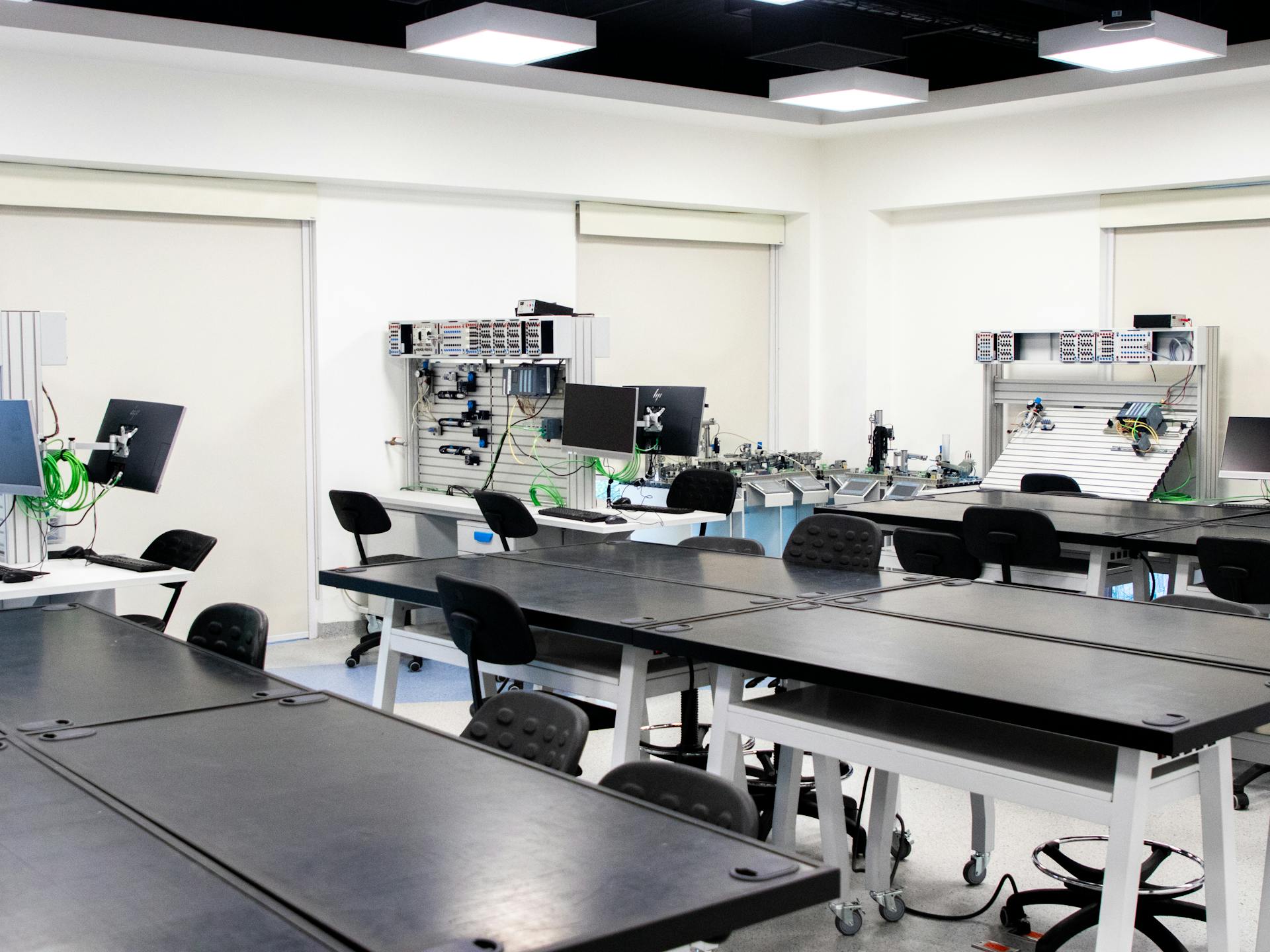
Data science is another field where programming skills are highly valuable, with a focus on data analysis and interpretation.
The hardware side of computing is where computer engineering comes in, involving designing and developing computer systems.
Information technology (IT) professionals leverage programming skills to manage and implement computer systems and software solutions.
Software engineering is a major that focuses on the systematic design, development, testing, and maintenance of software.
Cybersecurity professionals protect systems and data from unauthorized access, making programming skills essential in this field.
Game development requires a strong foundation in programming and computer science principles, creating interactive and engaging games.
Artificial intelligence involves creating intelligent agents that can perform tasks that typically require human intelligence, often relying on advanced programming.
Building websites and web applications necessitates knowledge of programming languages for both front-end and back-end development, making web development a great choice.
Computer graphics involves creating visual content using computers, often requiring programming skills for rendering and animation.
These majors are all backed up by AP Computer Science A, which provides a strong foundation in computer science.
Recommended read: Comp Sci Majors
Featured Images: pexels.com